


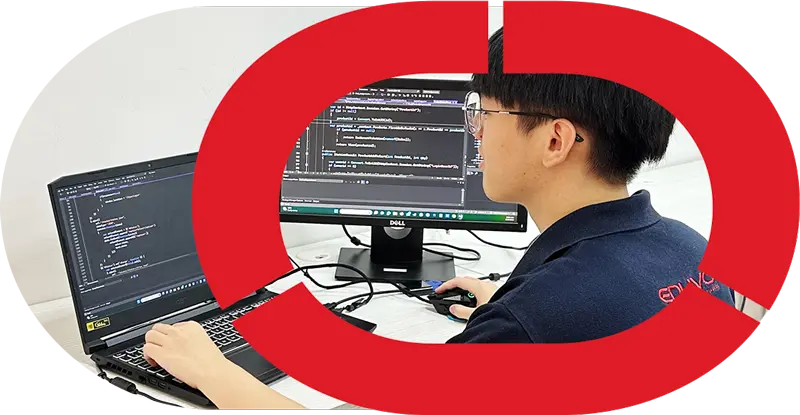


What Is Action Learning in IT Education?
Action Learning IT education is a learn-by-doing approach that helps students build IT skills through practical tasks, reflection, and repeated practice. Instead of relying on theory alone, learners w
Quick answer
Action Learning IT education is a learn-by-doing approach that helps students build IT skills through practical tasks, reflection, and repeated practice. Instead of relying on theory alone, learners work with real lab equipment, coding projects, troubleshooting exercises, and guided feedback to develop confidence and job-ready habits.
Key Takeaways
- Action Learning focuses on practical IT tasks, not passive memorisation.
- Students learn through hands-on practice, reflection, and improvement.
- It suits beginners, career changers, and parents seeking a clear vocational pathway.
- Eduvo Academy uses Action Learning IT education in one-year programmes with real lab equipment, coding projects, troubleshooting, GitHub portfolio building, and an internship pathway.

What Is Action Learning in IT Education?
Action learning in IT education means students learn by doing real tasks, solving problems, and then reflecting on what worked and what needs improvement. In simple terms, it is a structured way to learn IT by doing, so knowledge is built through practice, feedback, and repetition rather than memorising notes alone.Why it works for IT learners
- Students practise with real lab equipment, not only slides or textbooks.
- They build confidence through repeated troubleshooting and coding projects.
- They learn to reflect, improve, and work more independently.
- They develop practical evidence of skills through portfolio-based work.
Why Do IT Students Need Hands-On Practice Instead of Theory Alone?
IT students need hands-on practice because real technical work is about applying knowledge under pressure, not just remembering definitions. Theory builds the foundation, but practical repetition is what turns that foundation into usable skills.
Troubleshooting and debugging need practice
A support technician does not solve a problem by memorising a textbook answer. They check cables, test connections, read error messages, isolate causes, and try different fixes until they find the issue. In software, debugging works the same way: a student may need to trace a wrong output, spot a missing semicolon, or correct logic that breaks a program.| Feature | Theory-only learning | Practical learning route |
|---|---|---|
| Practical IT skills | Learns concepts in class | Applies concepts in real tasks |
| Confidence | May know the steps, but hesitate in real situations | Builds confidence through repeated practice |
| Workplace readiness | Understands the subject, but may struggle in live cases | Prepares for real support, coding, and collaboration tasks |
FeaturePractical IT skills
Theory-only learningLearns concepts in class
Practical learning routeApplies concepts in real tasks
FeatureConfidence
Theory-only learningMay know the steps, but hesitate in real situations
Practical learning routeBuilds confidence through repeated practice
FeatureWorkplace readiness
Theory-only learningUnderstands the subject, but may struggle in live cases
Practical learning routePrepares for real support, coding, and collaboration tasks
Teamwork and workplace thinking are learned on the job
IT work is rarely done alone. Students need to practise speaking clearly, documenting changes, following instructions, and working with others on shared tasks. These habits are difficult to build through theory alone because they depend on real situations, deadlines, and feedback.Through the provider’s German Ausbildung-inspired training, learners work with real lab equipment, coding projects, and internship pathway preparation in a guided setting. This helps them build workplace thinking early: how to report a problem, how to test a solution, and how to keep records of what they did. In Eduvo Academy Action Learning, students also create a GitHub portfolio, which shows practical progress in a way that is useful for both learning and future opportunities.For Malaysian families, the key benefit is simple: practical training helps students move from “I understand it” to “I can do it.” That makes the learning journey clearer, more engaging, and more relevant to real IT environments.This pathway is open to learners age 16 and above, with no SPM requirement. If you are looking for a supportive route into IT with guided practice, contact Eduvo and JOIN US NOW.How Does Action Learning Work in IT Support and Software Engineering?
Action Learning means students learn by doing, solving real tasks, and reflecting on what worked and what needs improvement. In IT support and software engineering, this approach turns each lesson into a practical cycle of action, feedback, and correction.
IT Support examples
In IT Support, learners practise the same kinds of tasks they will meet in a workplace. They work with real lab equipment, follow step-by-step procedures, and learn how to respond calmly when something does not work as expected. This is especially useful because support roles depend on fast thinking, clear communication, and careful checking.At Professional Diploma in IT Support, students may handle:- hardware checks such as identifying faulty RAM, storage issues, or loose cables
- networking tasks like setting up a basic LAN, checking IP settings, or testing connectivity
- helpdesk simulations where they log issues, ask the right questions, and write simple reports
- troubleshooting exercises that require them to isolate the cause before applying a fix
- team-based scenarios that build confidence in working with instructions and updates
Software Engineering examples
In software engineering, the same approach is used to help students learn how code behaves in real situations. They do not only write programs; they test them, correct errors, and improve them through repeated practice. For readers comparing practical routes into tech, this may also be useful: Software Engineering Without Degree Malaysia: GuideAt Professional Diploma in Software Engineering, learners may work on:- coding exercises that build logic, structure, and problem-solving habits
- GitHub tasks that help them store, organise, and showcase projects
- database exercises involving tables, queries, and simple data management
- debugging sessions where they trace errors, fix bugs, and retest the solution
- small projects that move from planning to build, test, and review
What Does a One-Year Action Learning Pathway at Eduvo Academy Look Like?
It is a structured route where students learn through guided lessons, lab work, project building, reflection, and an internship pathway over one year. Instead of waiting until the end of the course to practise, learners move through each stage in a steady sequence so they can learn IT by doing from the start.Who can join
This pathway is designed for beginners who want a practical entry into tech, including school leavers, career starters, and parents looking for a focused option for their children. It is open to learners age 16 and above, with no SPM requirement, which makes it more accessible for students who are ready to build real skills in a supportive setting.The one-year structure can suit those who want a faster, more direct route into vocational IT training without losing the value of guided study. For families comparing options, One Year Enough to Learn IT Support? can help explain how the timeline fits an IT Support pathway.What students practise
At Eduvo Academy, the learning flow is practical and repeated so students can build confidence step by step. In a typical cycle, learners may:- Start with short lessons that explain the concept and the task.
- Move into real lab equipment or project tasks to apply what they learned.
- Complete coding projects, troubleshooting activities, or technical exercises.
- Review mistakes, reflect on what worked, and improve the next attempt.
- Prepare for the internship pathway with portfolio materials and workplace habits.
Is Action Learning Enough on Its Own? What Students Still Need to Do
Is action-based learning enough by itself?
Not completely. It is a strong way to learn IT because it helps students practise, solve, and reflect, but they still need steady revision, reading, and guidance to build solid fundamentals. In other words, this approach works best when it is paired with disciplined study and regular feedback.What should students continue doing outside class?
They should review notes, repeat lab tasks, and correct mistakes after every lesson. For example, a student who learns a network setup in class should later redraw the steps, retest the configuration, and explain where an error came from. This habit builds deeper understanding and reduces the chance of forgetting key steps.Why is self-study still important in IT?
IT changes quickly, so students need the habit of learning independently. A beginner may understand a coding task in class, but later need to search documentation, read error messages carefully, and compare solutions before fixing a bug. That process builds confidence and workplace readiness over time.What else do students need besides practical exercises?
They also need communication, time management, and reflection. In group tasks, one student may handle the setup while another documents the process or explains the fix to the team. These soft skills matter because real workplaces expect clear updates, organised work, and responsible follow-through.How should parents or students judge progress?
Look for signs of growth, not perfection. Can the student explain what went wrong, show improved work, and complete tasks with less help than before? A Professional Diploma in IT Support or software-focused route should show this kind of steady progress through repeated practice, feedback, and portfolio development rather than one-off results.Where does this pathway fit for new learners?
It fits beginners who want a practical start but still understand that effort matters. The one-year programme is especially suitable for learners age 16 and above, with no SPM requirement, because it offers structure while still expecting personal responsibility. That balance is also part of German Ausbildung-inspired training, where students learn by doing while continuing to build knowledge step by step.In short, Eduvo Academy’s practical route is most effective when students stay curious, practise consistently, and take feedback seriously. If you want a supportive place to learn IT by doing, build confidence, and explore the Professional Diploma in IT Support or the Professional Diploma in Software Engineering, contact Eduvo and JOIN US NOW.Frequently Asked Questions
What does Action Learning mean in IT education?
Action Learning means learning by doing, solving problems, and reflecting on the process. In IT education, students build skills through practical tasks instead of only reading theory, so they understand how to apply what they learn.
Why is practice so important in IT education?
IT work involves troubleshooting, coding, debugging, teamwork, and workplace thinking, and these skills are best developed through practice. Theory can explain concepts, but repeated hands-on work helps students make better decisions when real problems happen.
How does Action Learning help IT Support students?
Action Learning IT education helps IT Support students work on hardware setup, networking tasks, troubleshooting, and helpdesk scenarios. By practising these situations directly, learners become more confident handling real support issues on the job.
How does Action Learning help Software Engineering students?
For Software Engineering students, Action Learning supports coding projects, GitHub portfolio building, database work, and debugging practice. This approach helps learners improve their programming skills while also learning how to organize code and fix mistakes like they would in a real development team.
Who benefits most from Action Learning in IT education?
Action Learning IT education is especially helpful for beginners, career changers, and anyone who wants a clear path into IT work. It gives learners a structured way to build confidence, practice job-ready skills, and prepare for the workplace.
References
- MIT Sloan School of Management — About Action Learning — MIT Sloan School of Management — About Action Learning
- The Action Learning, Action Research Association — About Action Learning — The Action Learning, Action Research Association — About Action Learning
- Revans, R. W. (1979). The Nature of Action Learning — Revans, R. W. (1979). The Nature of Action Learning
- Association for Experiential Education — What is Experiential Education? — Association for Experiential Education — What is Experiential Education?
- University of Portsmouth Research Portal — Action learning in management education: a state of the field review in higher education — University of Portsmouth Research Portal — Action learning in management education: a state of the field review in higher education


