


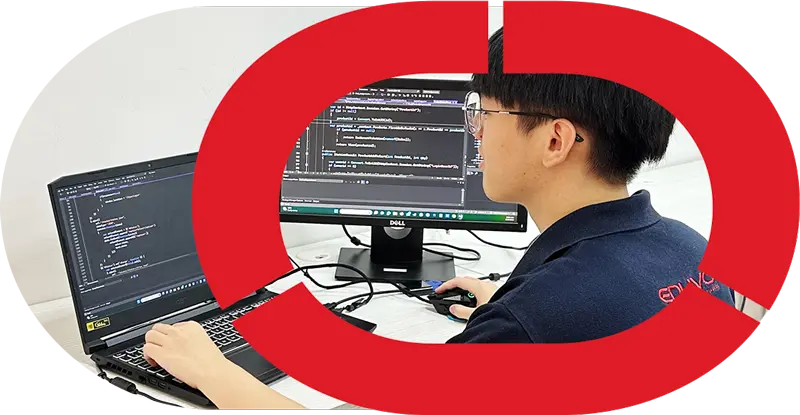


Eduvo Academy Action Learning: Learning IT by Doing
Eduvo Academy Action Learning is a hands-on IT education approach that helps students learn by doing real tasks, using real lab equipment, and building practical confidence step by step. At Eduvo Acad
Quick answer
Eduvo Academy Action Learning is a hands-on IT education approach that helps students learn by doing real tasks, using real lab equipment, and building practical confidence step by step. At Eduvo Academy, it supports beginners, SPM leavers, and career changers with market-aligned curriculum, internship pathway, and clear routes into IT Support and Software Engineering.
Key Takeaways
- Learn IT by doing through practical, guided training instead of theory alone
- Build confidence with real lab equipment, troubleshooting, coding projects, and GitHub portfolio work
- Suitable for age 16 and above, with no SPM requirement for entry
- Designed for one-year programme pathways in Professional Diploma in IT Support, Professional Diploma in Software Engineering, Professional Degree in Information Technology, and Professional Degree in Software Engineering

Eduvo Academy Action Learning is designed for students who want a practical path into IT without needing prior experience. It focuses on learn IT by doing, so learners practise real tasks, solve problems, and build skills through hands-on IT training in a supportive environment. This approach is especially relevant for beginners in Sunway Velocity Kuala Lumpur and the Klang Valley who want a clearer, more structured way to prepare for IT Support and Software Engineering pathways.
What is Eduvo Academy Action Learning?
Eduvo Academy Action Learning is a practical learning approach where students build IT skills by doing real tasks, solving real problems, and reflecting on their work. In simple terms, it means learn IT by doing instead of relying only on lectures and notes.
Direct definition
This approach is built for beginners who need a clear, guided way to understand IT from the ground up. Students work through structured activities such as setting up devices, identifying system issues, testing solutions, writing code, and reviewing what worked and what needs improvement. That makes the learning process more active, more memorable, and easier to connect to workplace expectations.

For the provider, this method is used in a way that supports different entry points, including no SPM requirement and age 16 and above learners who want a practical start in tech. It also fits a one-year programme structure that can lead into pathways such as Professional Diploma in IT Support, Professional Diploma in Software Engineering, Professional Degree in Information Technology, and Professional Degree in Software Engineering.
How it differs from theory-only learning
Theory-only learning often explains concepts first and leaves students to imagine how they would be used. Action learning does the opposite: it places students in realistic practice situations early, so they can connect each lesson to a task.
For example, an IT Support learner may practise with real lab equipment to diagnose hardware or network issues, rather than only reading about the parts. A software learner may complete coding projects, debug errors, and push work to a GitHub portfolio so progress can be reviewed and improved step by step. This is where the German Ausbildung-inspired training model becomes useful, because it combines classroom understanding with practical application in a market-aligned curriculum.
This difference matters for students in Sunway Velocity Kuala Lumpur and the Klang Valley because IT roles require more than memorising terms. They need troubleshooting confidence, technical discipline, and the ability to apply knowledge under guidance. Action learning gives students repeated practice, so they can grow from basic exposure to stronger technical readiness in a structured way.
It is also why this pathway includes an internship pathway: students are prepared not just to understand IT ideas, but to work with them in real settings.
Why does Action Learning matter in Action Learning IT education?
It matters because IT is a practical field: students need to do the work, not just understand the theory. When learners practise on real tasks, they build usable skills, better judgment, and the confidence to handle technical problems in a structured way.
Practical skill development

In
How does Action Learning work in IT Support and Software Engineering?
It works by putting students into realistic tasks first, then guiding them to analyse what happened, fix mistakes, and improve their method. In this pathway, Professional Diploma in IT Support and Professional Diploma in Software Engineering students learn through repeated practice, so they can connect concepts to actual technical work.
IT Support activities
For IT Support, students may practise setting up devices, checking network connections, installing software, and responding to common user issues. They learn how to follow a process: identify the problem, test possible causes, apply a fix, and confirm that the issue is resolved.
This is especially useful for no SPM requirement learners and age 16 and above students who need a clear starting point. Instead of only reading about systems, they work with real lab equipment and learn how to handle troubleshooting in a calm, step-by-step way. That is important because support work often depends on accuracy, patience, and clear communication.
Software Engineering activities
For Software Engineering, students move into coding tasks, debugging exercises, and small project builds. They may write simple features, correct errors, test changes, and review how their code behaves. This is where the provider’s German Ausbildung-inspired training approach supports a market-aligned curriculum that connects classroom learning with practical output.
What students produce
The goal is not just classroom completion. Students are expected to produce evidence of progress that can be reviewed and improved over time. That can include documentation, troubleshooting notes, code files, and a GitHub portfolio that shows what they have built.
| IT Support | Software Engineering |
|---|---|
| Device setup, system checks, and user support tasks | Coding exercises, debugging, and feature development |
| Tools such as operating systems, diagnostic utilities, and network test tools | Tools such as code editors, version control, and testing environments |
| Outcome: practical troubleshooting habits and service readiness | Outcome: working code, project files, and portfolio evidence |
This one-year programme is designed to help learners build practical readiness through an internship pathway, so they can continue developing in real work settings after training. For students in Sunway Velocity Kuala Lumpur and the Klang Valley, that means learning IT by doing in a structured, guided way. The training route also includes the Professional Degree in Information Technology and Professional Degree in Software Engineering options for learners who want a longer progression path.
Who can join Eduvo Academy’s no SPM requirement pathway?
This pathway is open to learners who are age 16 and above and want a practical start in IT without needing SPM results as the main entry barrier. It is designed for students who are ready to learn in a structured, supportive environment and build skills step by step.
Age and entry route
The provider’s entry route is suitable for a wide range of learners, especially those who want a more direct path into technical training. Because the programme is built around applied learning, applicants do not need to wait until they have a traditional academic track before starting.
- SPM leavers who want to move into IT quickly and prefer learning through practice rather than only theory.
- Students with weak SPM results who still show interest, discipline, and willingness to learn technical skills.
- School leavers aged 16 and above who are ready for a vocational route and want a clearer career direction.
- Learners in the Klang Valley, including those near Sunway Velocity Kuala Lumpur, who want accessible training close to home.
- Parents looking for a structured alternative for children who may not thrive in a purely exam-based route.
- Career changers or late starters who want to begin with a more practical foundation before progressing further.
The one-year programme gives learners a focused timeline to build confidence and technical habits. It is also a sensible starting point for those who may later continue to Professional Degree in Information Technology after gaining stronger fundamentals.
Best-fit student profiles
This pathway works best for students who learn well by doing, asking questions, and improving through feedback. It is especially relevant for learners who want a clear connection between classroom learning and real technical tasks.
- Students who enjoy fixing devices, setting up systems, or figuring out why something is not working.
- Students who are curious about coding, app logic, or how software is built and improved.
- Students who want a market-aligned curriculum that matches practical IT needs in Malaysia.
- Students who value German Ausbildung-inspired training, where learning is guided, applied, and closely tied to workplace expectations.
- Students who want to prepare for a Professional Diploma in IT Support or Professional Diploma in Software Engineering before moving into longer progression routes.
- Students who want to build confidence through real lab equipment, troubleshooting practice, coding projects, and a GitHub portfolio.
In short, this pathway is for learners who may not fit a traditional academic mould but are ready to grow through action, discipline, and guided technical training.
Is learning by doing enough to succeed in IT?
Yes, it is a strong foundation, but it is not the whole picture. In IT, students also need theory, discipline, communication, and consistent practice to turn learning into real competence.
What Action Learning can do
It helps students understand IT in a practical way. Instead of only memorising notes, learners work through real tasks such as setting up devices, checking system errors, writing small code features, and testing what happens when something breaks. That is why Professional Diploma in IT Support and Professional Diploma in Software Engineering both benefit from this approach: one builds troubleshooting habits, while the other builds coding logic and debugging skills.
This style of learning is especially useful for beginners and SPM leavers because it reduces the gap between “I studied it” and “I can actually do it.” In a German Ausbildung-inspired training model, students learn through guided repetition, feedback, and workplace-style practice. For example, a learner may use real lab equipment to diagnose a network issue, then explain the steps taken and improve the process next time. A software learner may complete coding projects, push work to a GitHub portfolio, and revise code after feedback. These are the kinds of experiences that build confidence in a market-aligned curriculum.
What students still need to do
Learning by doing works best when students stay consistent. They still need to attend classes, ask questions, review mistakes, and keep practising outside the classroom. IT is a field where small gaps in understanding can affect later progress, so learners should be ready to repeat tasks until they become familiar.
Students should also understand that practical training does not remove the need for structure. A one-year programme with no SPM requirement and age 16 and above access can open the door, but progress still depends on effort, punctuality, and a willingness to improve. This is true whether a student is aiming for the Professional Degree in Information Technology or the Professional Degree in Software Engineering pathway later on.
For parents and students in Klang Valley, including Sunway Velocity Kuala Lumpur, the main question is not whether classroom learning matters, but whether it is connected to real practice. The answer is yes: Action Learning IT education helps learners learn IT by doing, while still building the habits needed for an internship pathway and future work readiness.

If you want a practical route into IT, explore Eduvo Academy’s main offering and see how its supportive training environment can help you begin with confidence.
Frequently Asked Questions
What does Action Learning mean in IT education?
Why is Eduvo Academy Action Learning useful for IT Support and Software Engineering?
Who is Eduvo Academy Action Learning suitable for?
Can I join Eduvo Academy without SPM?
What can students gain from Eduvo Academy Action Learning?
References
- MIT Sloan School of Management — Action Learning — MIT Sloan School of Management — Action Learning
- MIT Office of Experiential Learning — About the Office of Experiential Learning — MIT Office of Experiential Learning — About the Office of Experiential Learning
- Rochester Institute of Technology, Golisano College of Computing and Information Sciences — Experiential Learning — Rochester Institute of Technology, Golisano College of Computing and Information Sciences — Experiential Learning
- Carnegie Mellon University, School of Computer Science — Experiential Learning — Carnegie Mellon University, School of Computer Science — Experiential Learning
- Georgia Tech Center for Education Integrating Science, Mathematics, and Computing — Project-Based Learning — Georgia Tech Center for Education Integrating Science, Mathematics, and Computing — Project-Based Learning


