


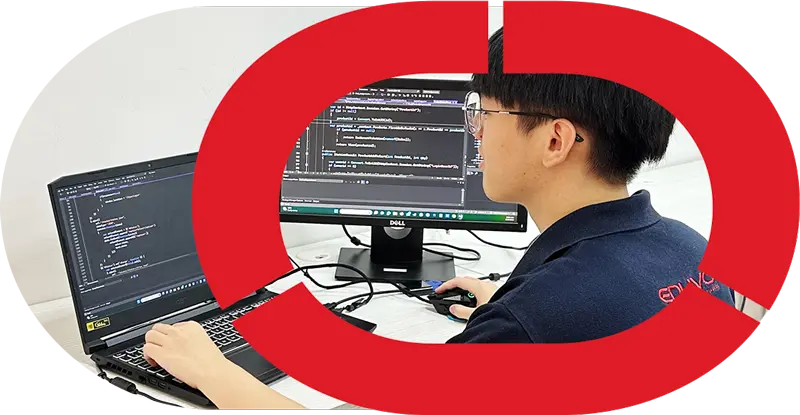


Fastest Way to Get IT Job Malaysia Without Degree
The Fastest Way to Get IT Job Malaysia Without Degree is to follow a skills-based, one-year pathway that builds practical IT ability, portfolio projects, and internship exposure for entry-level roles.
Quick answer
The Fastest Way to Get IT Job Malaysia Without Degree is to follow a skills-based, one-year pathway that builds practical IT ability, portfolio projects, and internship exposure for entry-level roles. For many learners, this means choosing a focused route in IT support or software engineering, gaining hands-on training, and preparing for market-aligned job requirements without waiting for a degree.
Key Takeaways
- A no degree IT career Malaysia is possible when you focus on practical skills, not just certificates.
- The fastest route usually starts with a one-year programme, hands-on training, and real lab equipment.
- Build a GitHub portfolio, troubleshooting skills, and internship exposure to strengthen employability.
- Eduvo Academy offers career-ready pathways such as Professional Diploma in IT Support, Professional Diploma in Software Engineering, Professional Degree in Information Technology, and Professional Degree in Software Engineering.

If you are looking for an IT job without degree Malaysia, the most realistic approach is to choose a structured, industry-focused route that helps you learn by doing. This 2026 roadmap explains how to move from zero experience to entry-level readiness through practical training, project work, and internship pathway preparation. It also shows how Eduvo Academy supports learners through German Ausbildung-inspired training, Action Learning, and market-aligned curriculum designed for SPM leavers, students without SPM, career changers, and working adults in Klang Valley and beyond.
Fastest Way to Get IT Job Malaysia Without Degree: What actually works?
Direct answer
The Fastest Way to Get IT Job Malaysia Without Degree is to follow a practical, job-focused pathway that teaches real technical skills, gives you project experience, and prepares you for entry-level roles through internship exposure. In simple terms: learn the skills employers test for, show proof of work, and build confidence through guided practice.
This is why an IT job without degree Malaysia is more realistic when you choose a structured route instead of trying to learn everything alone. For many learners, the quickest path is a one-year programme that combines classroom learning, lab work, and workplace preparation. At the academy, this includes options such as Professional Diploma in IT Support and Professional Diploma in Software Engineering, plus progression routes into Professional Degree in Information Technology and Professional Degree in Software Engineering.
Why practical training matters
Employers hiring for no degree IT career Malaysia usually look for evidence that you can do the work, not just talk about it. That means troubleshooting skills, basic networking or coding ability, communication, and the discipline to complete tasks properly. A market-aligned curriculum helps because it focuses on skills that match real entry-level job requirements, instead of only theory.
Practical learning also matters because IT roles are hands-on. In support roles, you may need to diagnose device issues, reset systems, manage accounts, or help users solve common problems. In software roles, you may need to write clean code, fix bugs, use GitHub, and explain your work clearly. That is why hands-on training, real lab equipment, Action Learning, and German Ausbildung-inspired training are valuable together: students learn, practise, and apply what they learn in realistic scenarios.
The academy reports a 99% employment rate (Eduvo Academy, 2026) and over 500 graduates, which suggests this pathway has been built around employability outcomes rather than classroom theory alone. The internship pathway also helps students understand workplace expectations early, so they are not starting from zero when they apply for entry-level roles.
Who this path is for
This route is suitable for SPM leavers, students with no SPM requirement concerns, career changers, and adults who want a practical start in tech without waiting years for a traditional route. It is also designed for learners aged 16 and above who want a clearer, faster structure.
It is especially useful if you want an IT Support pathway or a Software Engineering pathway and prefer learning by doing. If you are serious about building a GitHub portfolio, improving troubleshooting skills, and preparing for real job applications in Sunway Velocity Kuala Lumpur or the wider Klang Valley, this pathway gives you a focused starting point.
For families, the appeal is simple: the student gets guided training, real-world exposure, and a clearer career direction. For learners, the message is equally practical: start with the right foundation, stay consistent, and build proof of ability step by step. If you are ready to take that first step, JOIN US NOW and contact Eduvo to learn more.
Which IT job without degree Malaysia roles can beginners start with?
The fastest realistic entry point is usually an entry-level support or junior technical role, not a senior development position. For a beginner, the goal is to start with roles that value practical ability, communication, and problem-solving more than a degree.
Beginner-friendly roles
- IT support technician — helps users set up devices, install software, reset accounts, and solve common technical issues.
- Helpdesk support — answers tickets, logs problems clearly, and provides first-line troubleshooting for hardware, software, and network issues.
- Computer technician — handles basic PC repair, device maintenance, upgrades, and system checks.
- Junior network support — assists with routers, switches, Wi-Fi issues, cabling, and simple network monitoring.
- QA tester — checks whether software works as expected, reports bugs, and follows test cases carefully.
- Junior web developer — supports simple website updates, fixes front-end issues, and works with basic code changes.
- Junior developer pathway — a gradual route into software roles for learners who build coding fundamentals, version control habits, and project experience over time.
For students who want a clearer starting point, the academy’s Professional Diploma in IT Support is designed to prepare learners for practical support roles first, then move them toward broader technical opportunities. This is often the most direct route for someone seeking an IT job without degree Malaysia options because support roles are common entry points and help build workplace confidence early.
Skills needed for each role
Each role needs a different mix of technical and soft skills, but the basics overlap. Support roles usually need troubleshooting, patience, clear communication, and the ability to explain fixes in simple language. Junior network support adds basic networking knowledge, device setup, and attention to detail. QA testers need careful observation, documentation, and consistency. Junior web developers and junior developers need coding fundamentals, problem-solving, GitHub portfolio habits, and the discipline to keep improving through practice.
A no degree IT career Malaysia path also becomes stronger when learners show real proof of ability, such as lab exercises, practical assignments, and internship exposure. Employers often look for candidates who can learn quickly, work with real tools, and adapt to workplace expectations. That is why a market-aligned curriculum, Action Learning, German Ausbildung-inspired training, and real lab equipment matter so much in a one-year programme.
For families and learners, the message is simple: start with a role that matches your current skills, then grow step by step. With the right pathway, even beginners can move from classroom practice to internship readiness and entry-level applications in a structured way. To explore the next step, JOIN US NOW and contact Eduvo.
IT Support pathway vs Software Engineering pathway: Which one fits you?
The fastest route depends on your strengths: choose IT Support if you enjoy fixing problems, helping people, and learning systems step by step; choose Software Engineering if you like logic, building things, and spending more time on coding. Both can lead to an IT job without degree Malaysia, but they suit different personalities and daily work styles.
| Column | Column |
|---|---|
| IT Support | Software Engineering |
| Best fit | You like troubleshooting, devices, and helping users solve technical issues |
| Daily tasks | Set up laptops, install software, reset accounts, support users, check networks, and document fixes |
| Core skills | Troubleshooting skills, communication, patience, basic networking, and attention to detail |
| Entry-level roles | IT support assistant, helpdesk technician, desktop support, junior network support |
| Best fit | You enjoy coding, building applications, and improving how systems work |
| Daily tasks | Write code, test features, fix bugs, update GitHub portfolio, and work on small project tasks |
| Core skills | Programming fundamentals, problem-solving, version control, debugging, and persistence |
| Entry-level roles | Junior web developer, junior developer, QA tester, application support trainee |
Who should choose IT Support
This route is usually faster for beginners who want a practical entry point with fewer coding barriers. If you are comfortable talking to people, explaining solutions clearly, and staying calm when something breaks, IT Support may be the better starting path.
It also suits learners who want to build confidence through structured practice first. A strong Professional Diploma in IT Support can help you develop device setup, user support, and troubleshooting habits that employers value in junior roles. For many families, this pathway feels more straightforward because the work is visible, practical, and closely connected to real office environments.
Who should choose Software Engineering
Choose this route if you are curious about how apps and websites are built, and you are willing to practise coding regularly. It is a good match for learners who enjoy solving logic problems, working independently, and improving through repetition.
A Professional Diploma in Software Engineering is a better fit if you want to build a GitHub portfolio and learn how to turn ideas into working projects. The work is more technical from the start, but it can open doors to junior developer roles when paired with consistent practice and internship exposure.

How Eduvo Academy structures both routes
The academy designs both pathways with a market-aligned curriculum, Action Learning, and German Ausbildung-inspired training so learners do not study theory in isolation. Students move through a one-year programme with real lab equipment, guided exercises, and an internship pathway that helps them understand workplace expectations early.
Both routes are open to learners age 16 and above, with no SPM requirement, and they are designed to support progression into either the Professional Degree in Information Technology or Professional Degree in Software Engineering later on. With over 500 graduates and a 99% employment rate, the structure is built to help learners grow from beginner level into job-ready candidates in a realistic, supportive way. For families comparing options in Klang Valley or Sunway Velocity Kuala Lumpur, the main question is simple: do you prefer fixing systems, or building software? Contact Eduvo to take the next step.
Degree vs no-degree IT pathway: What is the realistic difference?
The realistic difference is not whether you can work in IT, but how quickly you can become job-ready and how much structured support you receive. A degree route usually takes longer and is broader, while a practical pathway is more focused on entry-level skills, portfolio building, and workplace exposure.
Degree route
A degree path is usually better for learners who want a longer academic journey, deeper theory, and a wider foundation before specialising. It often includes more general subjects, formal assessments, and a longer timeline before students start building job-specific confidence. For families comparing options, the key question is whether the learner is ready for a multi-year academic track or needs a more direct route into work preparation.
If you are considering a degree later, the academy’s Professional Degree in Information Technology can be a progression step after building a strong technical base. For students who are still deciding, the main advantage of the degree route is breadth; the main trade-off is time.
| Column | Column |
|---|---|
| Time | Usually longer, often several years before completion |
| Structure | More theory-heavy and academically broad |
| Hands-on practice | Present, but often less concentrated on job tasks |
| Internship exposure | May be available, depending on the programme |
| Portfolio building | Can happen, but often depends on student initiative |
| Career readiness | Stronger for learners who want a broader academic base before entering the job market |
One-year practical pathway
A one-year practical route is designed for learners who want a faster transition into entry-level roles. The focus is on job-relevant tasks such as troubleshooting, basic system setup, software development exercises, teamwork, and interview preparation. This is where the Professional Diploma in IT Support and Professional Diploma in Software Engineering become practical options for learners who want clear direction.
The main advantage is speed with structure: students spend more time doing, less time waiting. They can complete a GitHub portfolio, practice communication in a team setting, and gain internship exposure while still studying. For many families, this is the more realistic answer to IT job without degree Malaysia because it keeps the learning focused on what employers expect from junior candidates.
Self-learning
Self-learning can work, especially for disciplined learners, but it is usually less predictable. Some people build skills through online videos, projects, and community forums, yet they may struggle with consistency, feedback, and knowing whether their work meets industry expectations. Without a guided curriculum, it is easy to spend time on random topics instead of building a clear no degree IT career Malaysia pathway.
For learners who need structure, the difference is simple: self-learning depends heavily on personal discipline, while a guided programme provides pacing, feedback, and a clearer route from practice to portfolio to internship. That is why many students choose a supported pathway when they want a faster, more realistic start in IT.
What employers look for in a no degree IT career Malaysia
Employers usually look for proof that you can do the work, communicate clearly, and learn quickly. In a no-degree IT path, the strongest candidates show practical skills, a portfolio, and a professional attitude rather than relying on academic titles alone.
Technical proof
The first thing employers want is evidence. They want to see that you can solve real problems, not just describe theory. For entry-level roles, that often means basic troubleshooting, understanding operating systems, supporting users, and handling simple software or hardware issues.
A strong candidate should be able to explain:
- what they built,
- what tools they used,
- what problem they solved,
- and what they would improve next time.
For example, a student in Professional Diploma in IT Support should be able to show a ticket-handling exercise, device setup, or a simple network support task. A learner in Professional Diploma in Software Engineering should have a GitHub portfolio with small apps, code samples, and version control practice. This is where the academy’s market-aligned curriculum matters: it helps students build job-ready evidence step by step.
Work habits and soft skills
Technical skill alone is not enough. Employers also look for punctuality, consistency, teamwork, and the ability to follow instructions. In Malaysia, many junior IT roles involve helping users, updating records, or supporting a team, so communication matters as much as technical ability.
A realistic checklist for becoming job-ready without a degree looks like this:
- Build core technical skills through hands-on training and real lab equipment.
- Complete practical assignments that show troubleshooting skills and basic project delivery.
- Finish an internship pathway so you understand workplace expectations.
- Prepare a simple portfolio with GitHub links, project notes, and a short self-introduction.
- Practice explaining your work clearly in interviews and group discussions.
This is also why German Ausbildung-inspired training can be useful: it combines Action Learning with workplace habits, so students learn how to work, not only how to study. For parents and students, that balance is important because it supports both skill growth and discipline.
Interview readiness
Interviewers often ask about your learning process, how you handle mistakes, and whether you can work under guidance. They may also test basic logic, customer service mindset, and your interest in long-term growth. Students should be ready to talk about their IT Support pathway or Software Engineering pathway in simple, confident language.
The programme is designed for age 16 and above, with no SPM requirement, which makes it accessible to more learners who want a structured start. With over 500 graduates and a 99% employment rate, this pathway has helped students move from training into work-ready preparation in Sunway Velocity Kuala Lumpur and across Klang Valley.
If you want a practical route into IT job without degree Malaysia, contact Eduvo Academy and join a one-year programme that builds real skills, guided practice, and a clearer career direction. JOIN US NOW.
Frequently Asked Questions
Can I get an IT job in Malaysia without a degree?
What is the fastest realistic way to get an IT job in Malaysia without a degree?
Which IT role is easiest to enter without a degree?
How important is a portfolio for getting an IT job without a degree?
Does no degree mean I cannot grow in an IT career later?
References
- MYFutureJobs — MYFutureJobs
- MYFutureJobsGalaxy — MYFutureJobsGalaxy
- MyDigital / Malaysia Digital Economy Corporation (MDEC) — MyDigital / Malaysia Digital Economy Corporation (MDEC)
- Malaysian Qualifications Agency (MQA) — Malaysian Qualifications Agency (MQA)
- Ministry of Higher Education Malaysia — Ministry of Higher Education Malaysia


