


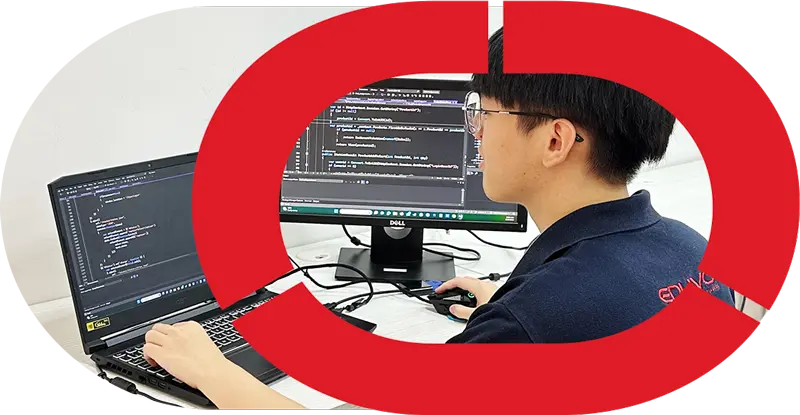


Is IT Hard for Beginners Without Background?
Yes, **is IT hard for beginners**? It can feel challenging at first because IT has new terms, tools, and problem-solving habits, but it is manageable with the right guidance. Beginners with no IT back
Quick answer
Yes, is IT hard for beginners? It can feel challenging at first because IT has new terms, tools, and problem-solving habits, but it is manageable with the right guidance. Beginners with no IT background can start step by step, especially through a beginner IT course in Malaysia that uses hands-on training, real lab equipment, and structured support.
Key Takeaways
- IT may feel difficult initially, but the learning curve becomes clearer with guided practice.
- A beginner IT course in Malaysia can help those with no IT background build skills step by step.
- TVET training is especially useful because it combines theory with hands-on training and real lab equipment.
- Eduvo Academy offers one-year programmes such as Professional Diploma in IT Support and Professional Diploma in Software Engineering for learners aged 16 and above, including those with no SPM requirement.

If you are asking whether IT is hard for beginners, the honest answer is that it can seem overwhelming at first, especially if you have no IT background. The good news is that the difficulty usually comes from unfamiliar concepts, not from a lack of ability. At Eduvo Academy, beginners can follow a clear, supportive path through Action Learning, German Ausbildung-inspired training, and an internship pathway that helps them build confidence one step at a time.
Is IT hard for beginners without background?
Yes — is IT hard for beginners can be challenging at the start, especially if you have never used technical tools before. But for most first-time learners, the real issue is unfamiliarity, not inability.
The honest answer for first-time learners
A beginner who starts from zero does not need to know coding, networking, or computer repair on day one. What matters first is learning the basics in a structured way: how computers work, how to use common software, how to troubleshoot simple issues, and how to follow step-by-step instructions.

This is why a Professional Diploma in IT Support or Professional Diploma in Software Engineering can be a practical starting point for students with no IT background, weak SPM results, or even no SPM requirement. A one-year programme gives learners time to build from fundamentals instead of rushing into advanced topics too early. It is also suitable for age 16 and above, which makes it accessible for school leavers and career changers who want a clearer path into skills-based training.
For example, a student who has never opened a device casing before may begin by learning hardware parts, basic maintenance, and how to identify common errors. Another learner may start with simple logic, problem-solving, and introductory programming tasks before moving into larger projects. These are small steps, but they matter because they turn unfamiliar ideas into repeatable skills.
Why difficulty feels different at the start
At the beginning, IT feels harder because everything is new at once: technical terms, software tools, troubleshooting steps, and practical workflows. Once learners see the same task more than once, the process becomes easier to remember and apply.
That is where the training method makes a real difference. A beginner IT course Malaysia should not rely on memorisation alone. It should use Action Learning, real lab equipment, and guided practice so students can try, make mistakes, correct them, and improve. The provider’s German Ausbildung-inspired training and internship pathway are designed to help learners connect classroom learning with workplace expectations.
For parents and students, this means progress is measured by steady skill-building, not by prior experience. With the right structure, beginners can move from confusion to confidence in a realistic way — one task, one project, and one lesson at a time.
Eduvo Academy supports this kind of practical start for learners who want a clear, supported route into IT Support and Software Engineering. If you are ready to explore your options, JOIN US NOW and contact Eduvo for the next intake.
What makes IT challenging for first-time learners?
IT can be challenging at first because beginners must learn new terms, new tools, and new ways of thinking at the same time. The good news is that these challenges are normal, and they become easier when learners follow a structured path.
New terminology and concepts
Many first-time learners feel overwhelmed by unfamiliar words such as operating system, network, hardware, software, and command line. For someone with no IT background, even simple instructions can sound technical at the start.
Common early challenges include:
- Understanding basic IT vocabulary
- Learning what different devices, cables, and systems do
- Connecting theory to real workplace tasks
- Remembering steps in the correct order
- Asking the right questions when something is unclear
This is why a beginner IT course Malaysia should introduce concepts gradually instead of expecting students to know everything from day one. In Professional Diploma in IT Support, learners can start from fundamentals and build confidence through guided practice.
Troubleshooting and error handling
A big part of IT is not just using systems, but fixing them when something goes wrong. That can feel stressful for beginners because errors often appear without warning, and the solution is not always obvious.

Typical early difficulties include:
- Reading error messages without panic
- Identifying whether the issue is hardware, software, or user-related
- Testing one possible fix at a time
- Learning not to guess randomly
- Staying calm when a device or system does not work as expected
This is where practice matters. In a one-year programme with real lab equipment and Action Learning, students can see how common faults are handled in a safe environment before they face them in a workplace setting. For readers interested in support roles, How to Become an IT Technician in Malaysia: 2026 Guide explains the pathway in more detail.
Coding logic and patience
For learners moving toward software, the challenge is often less about typing and more about thinking logically. Code has rules, and small mistakes can change the result completely. That means beginners need patience, repetition, and time to understand how one line affects another.
In Professional Diploma in Software Engineering, students are usually introduced to problem-solving step by step, so they can learn how to break big tasks into smaller parts. This is especially helpful for students without SPM, weak SPM students, age 16 and above, parents exploring options, and career changers who want a practical route into IT Support or Software Engineering.
For many learners, the difficulty is not a lack of ability — it is simply the early learning curve. With German Ausbildung-inspired training and an internship pathway, the provider helps beginners turn that early pressure into steady progress.
IT Support vs Software Engineering: which beginner path fits you?
The short answer is this: both paths can work for newcomers, but they suit different strengths. If you like troubleshooting, helping people, and fixing devices or systems, IT Support may feel more natural; if you enjoy logic, patterns, and building digital solutions, Software Engineering may be a better fit.

What you learn in IT Support
In a beginner IT course Malaysia learners often start with the basics of hardware, software, operating systems, and common troubleshooting steps. At Eduvo Academy, the Professional Diploma in IT Support is designed for students with no IT background, including age 16 and above, students without SPM, weak SPM students, parents, and career changers who want a practical starting point.
Typical day-to-day work in IT Support may include setting up laptops, checking network connections, helping users reset accounts, and recording issues clearly. This path suits learners who are patient, organised, and comfortable speaking with people. It also fits students who prefer practical tasks over abstract theory.
What you learn in Software Engineering
The Professional Diploma in Software Engineering focuses more on coding, problem-solving, and building applications step by step. Learners usually spend more time understanding how systems work, writing code, testing features, and correcting errors when something does not behave as expected.
This route suits students who enjoy structured thinking, detail, and creating digital products. It can be a good fit for learners who do not mind sitting with a problem for a while until they find the cause. For those exploring IT Support vs Software Engineering Malaysia Guide, the main difference is that one path leans toward support and maintenance, while the other leans toward development and building.
How to choose based on your strengths
| Column | Column |
|---|---|
| IT Support | Software Engineering |
| Daily tasks: fixing devices, helping users, checking systems | Daily tasks: writing code, testing features, solving logic problems |
| Skills: communication, troubleshooting, patience, organisation | Skills: analytical thinking, attention to detail, persistence |
| Learning style: practical, service-based, real-world scenarios | Learning style: structured, technical, problem-solving focused |
| Best for: learners who like support roles and hands-on fixes | Best for: learners who want to build software and work with code |
For both paths, the provider uses hands-on training, real lab equipment, Action Learning, German Ausbildung-inspired training, and an internship pathway so beginners can learn in a guided, practical way. In a one-year programme, students do not need to know everything on day one; they need a path that matches how they learn best. For families and students comparing options, Eduvo Academy encourages you to contact Eduvo and ask which route fits your goals, background, and confidence level.
How Eduvo Academy helps beginners learn IT step by step
Yes, it can feel challenging at the start, but the provider is designed to help learners move from basics to practice in a clear, structured way. For students with no IT background, weak SPM results, or no SPM requirement concerns, the focus is on building confidence through guided learning rather than expecting prior knowledge.
Action Learning and real lab practice
The first step is simple: learn by doing. Instead of only reading theory, students work through tasks in a lab setting using real lab equipment, so they can practise what they learn immediately. This matters for beginners because IT concepts become easier to understand when they are connected to real devices, real software, and real troubleshooting situations.
In a beginner IT course Malaysia students may start with basic device setup, system checks, file management, or simple support tasks before moving to more complex work. That approach helps learners who may feel unsure at first, especially age 16 and above students, parents looking for a practical route, and career changers who want a fresh start. If you want a broader overview of beginner-friendly pathways, see TVET IT course Malaysia: Complete 2026 Guide.
German Ausbildung-inspired training
The programme follows Professional Diploma in IT Support and Professional Diploma in Software Engineering pathways under a German Ausbildung-inspired training model. This means classroom learning is paired with practical application, so students are not just memorising concepts; they are using them in a guided environment.
For beginners, this structure is helpful because each topic is introduced step by step. In IT Support, learners can build skills in troubleshooting, user assistance, and system maintenance. In Software Engineering, they can start with coding fundamentals, logic, and simple project work before progressing further. The result is a more manageable learning journey for students who need structure, repetition, and support.
Internship pathway and market-aligned curriculum
The one-year programme includes an internship pathway, which gives students a chance to experience a workplace environment and understand how IT roles function in real organisations. This is especially useful for learners who want to know what day-to-day work looks like before deciding on their next step.
The curriculum is market-aligned, so the content focuses on practical skills that support entry-level readiness in IT Support and Software Engineering. That makes the route more relevant for beginners who want a clear direction without needing years of prior experience. For families comparing options, Eduvo Academy offers a supportive path for learners who want to start from fundamentals and grow with guidance. To learn more, contact Eduvo and ask which programme best fits your goals.
Am I ready for a beginner IT course in Malaysia?
Yes — if you are willing to learn step by step, practise regularly, and ask questions when something is unclear, you are ready to start. You do not need an IT background to begin; what matters most is your interest, consistency, and openness to guided learning.
Readiness checklist
A good beginner is usually someone who can:
- follow instructions carefully
- stay patient when solving problems
- use a computer for basic tasks
- practise outside class when needed
- accept feedback and improve over time
You do not need to be a tech expert before joining. Many learners start with simple concepts such as file management, typing, basic software use, logic, and troubleshooting habits. A structured Professional Diploma in IT Support or Professional Diploma in Software Engineering can help you build confidence from the ground up through practical lessons and real tasks.
Who can start at Eduvo Academy
This pathway is suitable for students with no IT background, weak SPM results, students without SPM, parents exploring options for their children, and career changers who want a more practical route into technology. The programme is open to learners age 16 and above, and it is designed as a one-year programme for those who want focused training rather than a long academic route.
The training centre uses hands-on training, real lab equipment, Action Learning, and German Ausbildung-inspired training to help beginners connect theory with practice. In IT Support, students can learn how to assist users, handle devices, and understand system basics. In Software Engineering, they can build confidence with coding fundamentals, problem-solving, and simple project work.
When to ask for guidance
If you are unsure whether you should start now, ask for guidance when you:
- feel nervous about computers
- are comparing course options in Malaysia
- want to know which track suits your strengths
- need a clearer path after school or work
- want to understand the internship pathway before enrolling
For many families, the most important question is not whether a learner is perfect, but whether the course offers enough structure and support to help them grow. That is why a beginner IT course Malaysia should be judged by its guidance, practical exposure, and learning environment, not by how much prior knowledge students already have.
If you are still comparing options, contact Eduvo Academy to ask about the one-year programme, IT Support, and Software Engineering pathways that fit your goals.


