


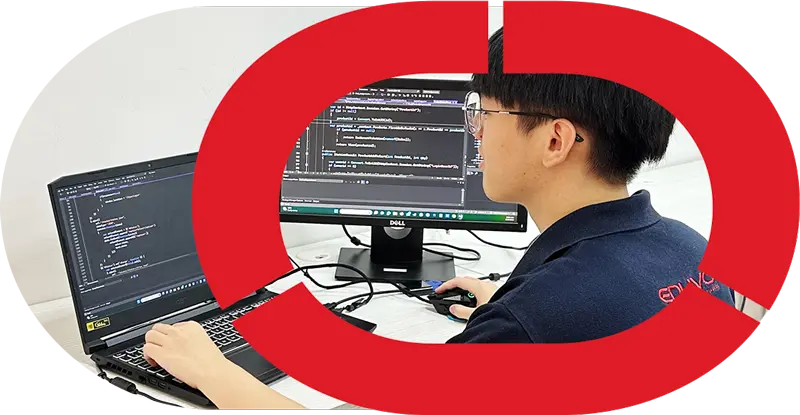


Is One Year Enough to Learn Software Engineering?
Yes, one year enough to learn software engineering can be enough to build a solid beginner foundation if the programme is structured, practical, and focused on the right skills. In a 1-year software e
Quick answer
Yes, one year enough to learn software engineering can be enough to build a solid beginner foundation if the programme is structured, practical, and focused on the right skills. In a 1-year software engineering course Malaysia learners can study coding fundamentals, web development, databases, GitHub portfolio work, and software projects, but not instant mastery. It is best seen as a start toward beginner-level readiness.
Key Takeaways
- A one-year programme can build practical foundations, not complete mastery.
- Students should expect coding fundamentals, web development, databases, GitHub portfolio work, and software projects.
- A German Ausbildung-inspired, Action Learning approach can make the learning more applied and job-relevant.
- Eduvo Academy offers a beginner-friendly pathway with no SPM requirement, age 16 and above eligibility, and internship pathway support.

A one-year software engineering course can be a realistic starting point for beginners in Malaysia, especially for students and parents who want a practical, structured pathway. This guide explains what can be learned in 12 months, what still requires further growth, and how to judge whether the programme suits a beginner-level goal. It also looks at the role of project practice, Action Learning, and internship exposure in building readiness. For families considering Eduvo Academy, the focus is on clear expectations, not quick promises.
Is One Year Enough to Learn Software Engineering?
Yes — one year enough to learn software engineering can be enough to build a solid beginner foundation, especially for students who want structured, practical training rather than instant professional mastery. It is realistic for learning core skills, completing projects, and preparing for entry-level exposure, but it is not enough to become fully advanced on day one.
In a Professional Diploma in Software Engineering or similar one-year programme, students can usually move through the basics in a clear sequence: programming logic, coding fundamentals, web development, databases, debugging, version control with GitHub, and teamwork through software projects. That means learners can finish the year with a portfolio of simple applications, such as a basic website, a database-backed form, or a small team-built project. These are valuable outputs because they show progress, not just theory.
What matters most is the depth of practice. A learner may understand how to build a simple app in 12 months, but advanced architecture, system design, secure deployment, and senior-level problem-solving usually need longer experience on real projects. This is why a one-year programme should be seen as the start of a career pathway, not the finish line. In software, skill grows through repeated coding, reviewing mistakes, improving code quality, and working with others over time.
For beginners in Malaysia, the right 1-year software engineering course Malaysia should also be honest about entry requirements and learner support. At Eduvo Academy, the pathway is designed for students aged 16 and above, with no SPM requirement, which makes it more accessible for school leavers and families looking for an alternative practical route. The training style is based on German Ausbildung-inspired training and Action Learning, so students spend more time applying what they learn instead of only reading theory.
The provider also supports an internship pathway, which helps learners understand workplace expectations before they move into more demanding roles. Some students may later continue into a Professional Degree in Software Engineering, while others may use the programme to build confidence, portfolios, and job-ready habits first. Either way, the key is realistic progress: one year can open the door, but long-term growth still depends on practice, discipline, and continued learning. If you want to explore this pathway, contact Eduvo Academy and JOIN US NOW.
What Can You Learn in One Year?
Yes — a one-year programme can give you a solid start in software engineering. In that time, most beginners can build core technical skills, complete small-to-medium projects, and become comfortable with the tools used in entry-level learning environments.

Coding fundamentals
A strong Professional Diploma in Software Engineering should begin with programming logic, syntax, variables, data types, conditionals, loops, functions, and basic problem-solving. Students also learn how to read errors, debug code, and write cleaner programs step by step.
In practical terms, this means a learner may be able to create simple calculators, quiz apps, form validations, or basic automation scripts by the end of the year. They should also understand how to break a problem into smaller parts, which is a key habit for future growth in the field.
Web development
A one-year path usually introduces front-end development with HTML, CSS, and JavaScript, then moves into responsive layouts, user interaction, and basic website structure. Students may also practise building simple pages that work on mobile and desktop screens.
This stage is often where learners begin to see real progress, because they can make visible projects instead of only studying theory. By graduation, a beginner may be able to build a personal website, a landing page, or a simple web app prototype. That is a meaningful outcome, even if deeper software architecture skills still take longer to develop.
Databases
Learners are also usually introduced to databases, tables, relationships, and basic SQL. They may practise storing and retrieving information such as user profiles, product lists, or booking records.
A one-year course is often enough to understand how data flows through a simple application. However, more advanced areas like database optimisation, system design, and security usually need more time and workplace exposure.
GitHub portfolio
Another important outcome is a basic GitHub portfolio. Students should learn how to use Git, commit changes, manage versions, and upload software projects that show their progress.
This matters because employers and families can see proof of learning, not just attendance. A good portfolio may include class exercises, team assignments, and a final project that demonstrates coding fundamentals, web development, and databases together.
| Skill Area | What Can Be Built in One Year | What Still Needs More Time |
|---|---|---|
| Coding fundamentals | Basic programs, logic, debugging habits | Faster problem-solving under pressure |
| Web development | Simple websites and beginner web apps | Advanced front-end or back-end depth |
| Databases | Basic SQL and data handling | Performance tuning and complex design |
| GitHub portfolio | A set of visible software projects | Professional-level code quality and scale |
For learners considering Professional Diploma in Software Engineering, this kind of one-year programme can be a practical starting point — especially when the training is structured, supportive, and focused on real project work.
What Cannot Be Mastered in One Year?
No, a single year is usually not enough to master every part of software engineering. It can build a strong foundation, but deeper specialization, large-scale system design, and professional-level decision-making still take longer practice and real projects.
Advanced architecture
A 1-year software engineering course Malaysia can introduce learners to how applications are structured, but advanced architecture needs more time because it depends on experience with failures, trade-offs, and scale. In a Professional Diploma in Software Engineering, students may learn the basics of building and connecting systems, yet they will still need longer exposure before they can confidently design enterprise-level solutions.
Areas that typically need more practice include:
- Designing systems for high traffic and heavy usage
- Choosing the right structure for different business needs
- Managing performance, scalability, and maintainability
- Handling security concerns across multiple layers
- Making architecture decisions based on real deployment feedback
These skills are not learned from theory alone. They grow when learners work on software projects that are larger, change over time, and require revision.
Complex systems and specialisation
More advanced fields also take longer than a one-year programme. Students can learn coding fundamentals, web development, databases, and Action Learning in a practical setting, but specialisation usually comes after repeated exposure to real workplace problems and an internship pathway.
Examples of areas that usually require additional time include:
- Cloud deployment and infrastructure management
- Mobile app architecture at production level
- Backend services with multiple APIs and integrations
- Data engineering, system optimisation, and automation
- Deep debugging in mature codebases
- Team workflows that involve many developers, testers, and product owners
This is why the provider’s German Ausbildung-inspired training is best seen as a launchpad, not an endpoint. It helps learners become more confident with GitHub portfolio development, teamwork, and project delivery, but senior-level readiness takes longer than 12 months.
For parents and students, the realistic view is simple: a one-year programme can prepare someone for beginner tasks and further study, but not instant mastery. For those exploring Eduvo Academy, this pathway is meant to support steady growth — and if you want to understand whether it fits your goals, contact Eduvo to learn more.
How Does a One-Year Programme Build Career Readiness?
A one-year programme can build career readiness by giving learners a clear path from basic understanding to practical output. It helps students move beyond theory and start showing evidence of skills through projects, teamwork, and portfolio work.
Action Learning and Real Projects

Action Learning is effective because students learn by doing, reflecting, and improving. In a structured Professional Diploma in Software Engineering, learners usually start with guided classroom sessions, then apply what they learn to small assignments, and later to larger software projects.
- First, students learn the core concepts in a simple, structured way.
- Next, they practise those ideas through coding exercises, debugging tasks, and website or app builds.
- After that, they complete team-based software projects that mirror real workplace expectations.
- Finally, they review their work, receive feedback, and improve their output before moving forward.
This step-by-step approach matters because employers and internship supervisors often look for more than theory. They want evidence that a learner can follow instructions, communicate clearly, solve small technical problems, and complete assigned work on time. For Malaysian students, this is especially useful in a 1-year software engineering course Malaysia because it turns short study time into visible, practical progress.
The provider’s German Ausbildung-inspired training model supports this process by combining classroom learning with real-world practice. That means learners are not only listening to lessons; they are also building confidence through software projects that can be shown in interviews or added to a GitHub portfolio.
Internship Pathway and Portfolio Growth
An internship pathway adds another layer of career readiness. It gives learners a chance to experience workplace routines, observe team workflows, and understand how projects move from planning to delivery. Even if the placement is introductory, it helps students connect classroom skills with real expectations.
Here is how the journey typically develops:
- Build coding fundamentals, web development, and database basics in class.
- Turn those skills into software projects with clear features and documentation.
- Organise the work into a GitHub portfolio so progress is easy to review.
- Enter internship exposure to practise communication, teamwork, and professional habits.
- Return with feedback that can improve the next project or learning stage.
This pathway is especially relevant for Eduvo Academy learners because the training is designed for age 16 and above, with no SPM requirement, making it accessible to beginners who want a practical start. It also supports students who want to compare further study options such as a Professional Degree in Software Engineering later on.
If you are evaluating whether this route fits your goals, Professional Diploma in Software Engineering is the best place to start. For parents and students who want a realistic first step, contact Eduvo to discuss the programme and next intake.
Is a one-year programme really enough to start learning software engineering?
Yes — for many beginners, a one-year programme is enough to build solid foundations and complete beginner-level software projects. It is not enough to master every area, but it can give students a practical starting point in coding, web development, databases, and version control.
What will I actually learn in one year?
A well-structured Professional Diploma in Software Engineering usually covers programming fundamentals, web development, database basics, debugging, GitHub workflow, and teamwork practice. Students also learn how to plan and present software projects, which is important when building a first GitHub portfolio.
Can I get a job immediately after finishing?
You may be ready for entry-level opportunities, but that depends on your project quality, communication skills, and how well you can show your work. A one-year software engineering course Malaysia is best seen as a launchpad, not a shortcut to instant success. Employers usually look for evidence such as working projects, problem-solving ability, and consistent practice.
What takes longer than one year?
Advanced software architecture, larger team collaboration, system design, and deeper specialisation usually need more time and repetition. Many learners continue into an internship pathway or a Professional Degree in Software Engineering to strengthen their technical depth and career direction.
Who is this type of course suitable for?
This pathway is often suitable for beginners who want structured, practical learning, including age 16 and above learners with no SPM requirement. At Eduvo Academy, the one-year programme is designed to be supportive and beginner-friendly, with Action Learning and German Ausbildung-inspired training that connect classroom study to practical software projects.
How should parents judge whether it is a good choice?
Parents should look at whether the course teaches real skills, builds a GitHub portfolio, and includes guided project work. If the student is motivated and wants a practical route into IT, this can be a realistic first step — especially when the provider explains the next stage clearly and honestly.
If you are exploring a practical start in IT, contact Eduvo Academy to learn more about the one-year programme and how it can support your next step in software engineering.
References
- U.S. Bureau of Labor Statistics, Occupational Outlook Handbook: Software Developers, Quality Assurance Analysts, and Testers — U.S. Bureau of Labor Statistics, Occupational Outlook Handbook: Software Developers, Quality Assurance Analysts, and Testers
- Stack Overflow Annual Developer Survey 2025 — Stack Overflow Annual Developer Survey 2025
- U.S. Bureau of Labor Statistics, Occupational Requirements Survey: Computer and Mathematical Workers — U.S. Bureau of Labor Statistics, Occupational Requirements Survey: Computer and Mathematical Workers
- NIST Special Publication 500-211, Software Engineering Environment Frameworks — NIST Special Publication 500-211, Software Engineering Environment Frameworks


