


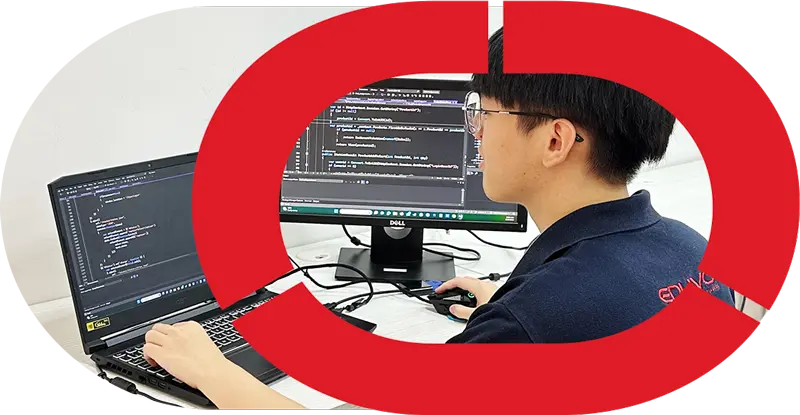


What Skills Matter More Than SPM Results in IT?
In IT, skills more important than SPM results in IT usually include troubleshooting, communication, coding fundamentals, problem-solving, hands-on training, and the ability to build proof of work such
Quick answer
In IT, skills more important than SPM results in IT usually include troubleshooting, communication, coding fundamentals, problem-solving, hands-on training, and the ability to build proof of work such as a GitHub portfolio. SPM results still matter, but they are only one part of the picture; practical ability, attitude, and internship performance often show whether a beginner is ready for the field.
Key Takeaways
- IT employers and trainers often look for practical skills, not just exam results.
- Weak SPM students can still build a credible IT pathway through hands-on learning and portfolio work.
- Communication, troubleshooting, and problem-solving are essential for both IT Support and Software Engineering.
- Eduvo Academy offers a one-year, German Ausbildung-inspired training pathway with internship support and Action Learning.

For many Malaysian families, the question is not whether SPM matters, but how much it matters compared with real IT ability. This guide explains which skills, habits, and proof of work are more important for entry into the field, especially for weak SPM students, beginners, and career changers. It also shows how Eduvo Academy helps learners build IT Support skills, Software Engineering skills, and industry-ready confidence through hands-on training, internship pathway support, and portfolio development.
What skills matter more than SPM results in IT?
In IT, practical ability often matters more than exam scores when a beginner is trying to prove readiness. That is why many families searching for skills more important than SPM results in IT should focus on what a student can actually do, not only on the certificate they hold.
Practical ability over theory alone
For entry-level IT Support, the most valuable skills are usually troubleshooting, clear communication, and patience under pressure. A learner should be able to identify common laptop or network issues, follow a step-by-step diagnostic process, explain simple solutions to non-technical users, and escalate problems properly when needed. In Software Engineering, the core basics are different but just as practical: coding fundamentals, understanding logic, using GitHub, reading error messages, and fixing bugs systematically.
These are the kinds of IT skills Malaysia employers and trainers can observe quickly in a beginner. For example, a student who can reinstall software, check device settings, document a fix, and communicate the outcome clearly is already showing useful workplace readiness. A student who can write a simple program, push code to GitHub, and explain what the code does is also building proof that goes beyond exam performance.
This matters especially for weak SPM IT career pathways, where a student may not have strong grades but still has the discipline and interest to learn technical work. SPM results still matter for some academic routes, but they do not fully define whether a learner can succeed in a skills-based pathway, especially one with no SPM requirement and open to age 16 and above.

Proof of work through projects and internships
In IT, proof often speaks louder than claims. A GitHub portfolio, small class projects, and internship tasks help show consistency, problem-solving, and the ability to learn from feedback. A portfolio does not need to be large at the start; even a few well-documented projects can show progress, such as a basic website, a simple app, or a troubleshooting log.
This is where Eduvo Academy uses a one-year programme built around Action Learning and German Ausbildung-inspired training. Instead of relying only on theory, learners practise real tasks, work on guided projects, and prepare for an internship pathway. That combination helps students develop IT Support skills and Software Engineering skills in a structured way while building confidence through hands-on training.
For parents, this approach is reassuring because it shows that a child is not just memorising content. They are learning reliability, teamwork, and how to work in a real environment. For students, it means every project, repair task, and code submission becomes evidence of growth. That evidence can be more convincing than marks alone when starting an IT journey.
Do SPM results still matter for IT careers?
Yes, SPM results still matter for some IT pathways, especially when a student wants to enter a more academic route. But for many practical IT roles and training routes, they are only one part of the picture.
When academic results matter
SPM grades can be important if a student is applying for programmes that set subject or grade requirements, especially for maths, science, or English. These results may also help schools or parents judge whether a student is ready for a more theory-heavy route. For example, a learner with stronger academic results may find it easier to move into a course that expects faster reading, writing, and exam performance.
That said, academic results do not fully show whether someone can succeed in IT. A student may have weak SPM IT career prospects on paper, yet still do well once they begin learning in a practical environment. In IT, the ability to follow instructions, stay organised, and keep improving often matters just as much as exam performance.

When skills-based pathways matter more
For skills-based routes, practical ability can carry more weight than school results alone. This is especially true in entry-level support and junior technical roles, where employers and training providers often look for evidence that a learner can solve problems, communicate clearly, and handle real tasks.
| Academic routes | Skills-based routes |
|---|---|
| May require stronger SPM results for entry | May accept learners with no SPM requirement |
| Focus more on theory and assessments | Focus more on practice, projects, and workplace readiness |
| Better for students who prefer exam-led study | Better for students who learn by doing |
| May take longer before real task exposure | Can build job-ready habits earlier through hands-on training |
For students aged 16 and above, this kind of route can be a practical starting point. The provider’s one-year programme is designed for learners who want to build IT Support skills and Software Engineering skills through Action Learning and German Ausbildung-inspired training. That means learners do not just study concepts; they practise troubleshooting, communication, coding fundamentals, and other day-to-day abilities that matter in real work.
If you want a clearer beginner route into IT support, see How to Become an IT Technician in Malaysia: 2026 Guide.
For parents, the key point is balance: SPM results still matter, but they are not the only measure of future potential. In a structured, practical pathway, a motivated student can begin building a solid foundation even if their exam results were not strong. To learn more about the next step, JOIN US NOW and contact Eduvo Academy.
What skills do employers look for in IT Support?
In IT Support, employers usually look first for practical ability, not just exam scores. A student with strong troubleshooting, clear communication, and steady work habits can often show more readiness than someone who only has theory knowledge.
Technical fundamentals
The core IT Support skills are usually built around day-to-day problem solving:
- hardware knowledge, such as setting up PCs, printers, and basic peripherals
- networking basics, including Wi-Fi, routers, IP addresses, and simple connectivity checks
- troubleshooting, especially identifying whether a problem is caused by hardware, software, or user settings
- user support, such as helping staff reset passwords or access systems
- documentation, so issues and fixes are recorded clearly for the next person
- patience, because many support cases require calm, step-by-step checking
- communication, so technical instructions can be explained in simple language
These are the abilities that help a beginner handle real workplace tasks. For example, a support trainee may need to check cables, test whether a device is online, restart a service, or guide a user through a login issue. That is why weak SPM IT career pathways can still make sense for the right student if the learning is practical and structured.

For readers who want a clearer beginner route into IT Support, see How to Become an IT Technician in Malaysia: 2026 Guide.
Workplace qualities
In addition to technical basics, employers also value reliability, teamwork, and problem-solving. A support role often involves responding quickly, staying organised, and knowing when to ask for help.
This is where a one-year programme like Eduvo Academy can be useful for learners aged 16 and above. The pathway is designed to build IT Support skills through hands-on training, Action Learning, and German Ausbildung-inspired training, so students practise the habits that matter in real work. That includes learning how to document issues properly, work with others, and build a GitHub portfolio for software-related tasks.
For Software Engineering skills, the same mindset applies: coding fundamentals, logical thinking, and the ability to debug small errors are often more useful at the start than advanced theory alone. In other words, strong IT skills Malaysia employers can recognise are usually visible in what a learner can do, not just what they can recall from a paper.
If you are comparing entry routes, this is why the provider’s practical approach can be a helpful option for students and parents who want a realistic starting point. To learn more, JOIN US NOW and contact Eduvo Academy.
What skills do employers look for in Software Engineering?
The strongest candidates usually show they can build, fix, and explain small software tasks clearly. In practice, that means coding fundamentals, database basics, debugging, GitHub activity, project work, logic, teamwork, and problem-solving matter more than a single exam score when someone is starting out.
Coding and technical foundations
For entry-level software roles, employers often look for whether a learner can write simple code, understand variables, use conditions and loops, and spot errors in their own work. They also want basic familiarity with databases, version control, and how software changes are tracked. A strong foundation is not about knowing everything; it is about being able to learn quickly and apply the basics correctly.
Here is a simple comparison of the key skill areas for software engineering:
| Column | Column |
|---|---|
| Coding fundamentals | Writing clean basic code, understanding syntax, and building small features |
| Databases | Knowing how data is stored, queried, and updated |
| Debugging | Finding errors, reading messages, and testing fixes |
| GitHub | Saving work, showing progress, and sharing projects |
| Project work | Completing real tasks from start to finish |
| Logic | Breaking problems into steps and choosing the right solution |
| Teamwork | Working with others, sharing updates, and accepting feedback |
| Problem-solving | Staying calm, analysing issues, and trying practical solutions |
In Malaysia, this is especially relevant for students with weak SPM IT career pathways or even no SPM requirement routes, because a skills-based programme can help them demonstrate ability through work samples instead of relying on paper results alone. If you want a broader overview of how this pathway fits into IT education, see TVET IT course Malaysia: Complete 2026 Guide.
Portfolio and teamwork evidence
A GitHub portfolio can be a powerful sign of readiness because it shows what a learner has actually built. Even small projects such as a calculator app, a simple website, or a basic CRUD system can help demonstrate progress, consistency, and the ability to improve after feedback. For many beginners, this kind of evidence is more useful than claiming knowledge without proof.
Teamwork also matters because software is rarely built alone. Employers and training teams often notice whether a student can communicate clearly, ask good questions, and keep working when a task becomes difficult. A one-year programme like Eduvo Academy can support this through Action Learning and German Ausbildung-inspired training, which helps learners practise technical work in a structured, real-world way.
For parents and students comparing IT skills Malaysia options, the key question is not only “What was the SPM result?” but also “Can this learner code, solve problems, and work with others reliably?” That is why practical evidence remains so important in software engineering.
How can weak SPM students build an IT pathway in Malaysia?
Weak SPM results do not have to end an IT journey. A student can still start with a practical route, build core technical ability, and grow into a stronger candidate through training, projects, and real workplace exposure.
Start with a beginner-friendly route
The first step is to choose a pathway that focuses on entry-level readiness rather than only academic grades. In Malaysia, some programmes accept learners with no SPM requirement if they are age 16 and above, which gives school leavers a way to begin earlier instead of waiting years for another qualification.
- Check whether the programme is designed for beginners and whether it offers a one-year programme with a clear progression path.
- Look for IT Support skills and Software Engineering skills that start from the basics, such as troubleshooting, coding fundamentals, and simple system tasks.
- Confirm that the route includes practical assessment, not just theory, so the learner can show steady improvement over time.
For families comparing options, TVET IT course Malaysia: Complete 2026 Guide is useful because it explains how skills-based training can fit different learner needs, including students who are not ready for a traditional academic route.
Use training, projects, and internship experience
- Build ability through structured practice. A strong beginner pathway should include Action Learning and German Ausbildung-inspired training, where learners study concepts and apply them immediately in real tasks. This is especially helpful for weak SPM IT career starters who learn better by doing than by memorising.
- Create evidence of progress. Students should complete small projects, practise problem-solving, and upload work to a GitHub portfolio. Even simple work such as a login page, a basic app, or a troubleshooting checklist can show effort and consistency.
- Prepare for workplace exposure. Internship pathway preparation should include communication, teamwork, punctuality, and the habit of asking clear questions. These soft skills matter because employers and trainers need learners who can follow instructions, work safely, and keep improving.
For parents, the goal is not to force a child into a rigid academic path. It is to help them move into a realistic IT pathway that matches their starting point and builds confidence step by step. That is why Eduvo Academy offers a one-year programme designed to support beginners through practical learning, project work, and career-ready preparation.
If you want a supportive start in IT, contact the provider and JOIN US NOW.
Frequently Asked Questions
What skills matter more than SPM results in IT?
Can weak SPM results still lead to a career in IT?
What should beginners build to prove they are ready for IT?
Is SPM still important for IT courses and jobs?
Does Eduvo Academy accept students without SPM?
References
- Indeed — What Is Skills-First Hiring? An Introduction for Employers — Indeed — What Is Skills-First Hiring? An Introduction for Employers
- Indeed — How to Implement Skills-First Hiring on Indeed — Indeed — How to Implement Skills-First Hiring on Indeed
- World Economic Forum — Future of Jobs Report 2025 — World Economic Forum — Future of Jobs Report 2025
- Microsoft — Hiring Guidebook — Microsoft — Hiring Guidebook
- Microsoft — Skills for Early IT Career Success — Microsoft — Skills for Early IT Career Success


