


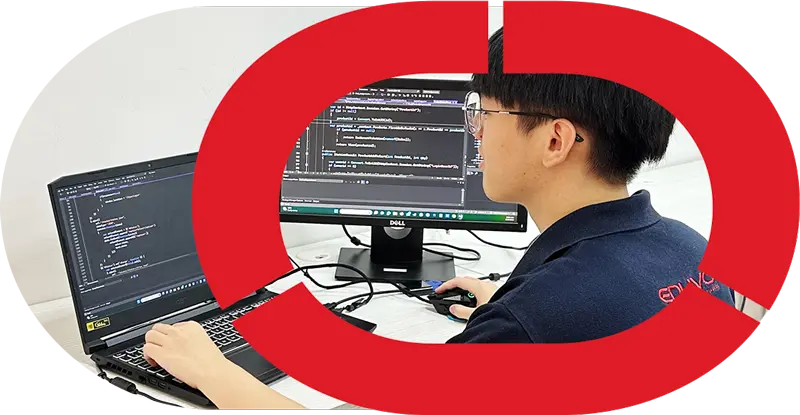


Software Engineering Course Kuala Lumpur: 2026 Guide
Software Engineering Course Kuala Lumpur refers to a practical training pathway for students in Kuala Lumpur and the Klang Valley who want to build coding skills, work on real software projects, creat
Quick answer
Software Engineering Course Kuala Lumpur refers to a practical training pathway for students in Kuala Lumpur and the Klang Valley who want to build coding skills, work on real software projects, create a GitHub portfolio, and prepare for internships and entry-level tech roles. Eduvo Academy offers TVET-style options, including a Professional Diploma in Software Engineering and a Professional Degree in Software Engineering, with no SPM requirement for eligible learners aged 16 and above.
Key Takeaways
- Focus on courses that teach coding skills, web development, databases, and project-based learning.
- Look for a programme that helps you build a GitHub portfolio and complete software projects.
- Choose a pathway with internship exposure and market-aligned curriculum for job readiness.
- Eduvo Academy offers German Ausbildung-inspired training with Action Learning in Kuala Lumpur for beginners and career changers.

Software Engineering Course Kuala Lumpur is best evaluated by practical outcomes, not just course titles. This guide explains what Malaysian students, parents, and career changers should look for in 2026, including coding skills, real projects, GitHub portfolio building, internship pathway, and whether the learning style truly prepares you for work. It also shows how Eduvo Academy’s TVET-style pathways support beginners through market-aligned curriculum, supportive teaching, and structured hands-on training in Sunway Velocity Kuala Lumpur and the Klang Valley.
Software Engineering Course Kuala Lumpur: What Should You Look For in 2026?
A good programme should help you learn coding, build real projects, create a GitHub portfolio, and gain internship exposure. If a Software Engineering Course Kuala Lumpur does not show these outcomes clearly, it is worth looking deeper before enrolling.

First, check whether the curriculum is built around practical skills rather than theory alone. In 2026, students should expect training in web development, databases, version control with GitHub, and software projects that can be shown to parents or employers. A strong course should also explain what you will build each term, so you can see steady progress from beginner tasks to more complete applications.
Second, look at the entry requirements. A supportive pathway should welcome learners with no SPM requirement, especially for students aged 16 and above who are ready to start earlier through TVET. This matters for weak SPM students, school leavers, and career changers who want a structured route into tech without waiting for a traditional academic path.
Third, ask how the learning model works. The academy’s one-year programme uses Action Learning and German Ausbildung-inspired training, which means students do not just listen to lectures; they practise, solve tasks, and apply what they learn in realistic settings. That approach is useful for beginners because it helps build confidence step by step.
Fourth, review the location and support system. A campus in Sunway Velocity Kuala Lumpur is convenient for students from the Klang Valley who want accessible classes and a local environment. It also helps if the programme offers mentoring, clear study milestones, and a pathway that supports internship exposure, since workplace experience is often where students learn how software teams actually operate.
You should also ask whether the course helps you leave with a portfolio, not just a certificate. A solid programme should guide you to publish code, document your projects, and show evidence of problem-solving through GitHub. That portfolio can become an important part of future job applications, interviews, and further study planning.
For parents, the key question is simple: will this pathway help your child develop discipline, technical ability, and career direction? For students, the question is equally practical: will you graduate with coding skills, software projects, and the confidence to continue into work or further training? Eduvo Academy reports a 99% employment rate and over 500 graduates, which gives families a useful reference point when comparing options.
What Will You Learn in a Software Engineering Course?
A good software engineering course should teach you how to code, build real applications, and present your work confidently. In practical terms, you should finish with programming skills, web development knowledge, database understanding, debugging ability, and a portfolio you can show to future employers or trainers.
Programming fundamentals
The first stage usually focuses on the logic behind software. You learn how to think step by step, write clean code, and solve problems in a structured way. This is especially helpful for beginners, including students with weak SPM results or no SPM background, because the learning starts from the basics.
- Understand variables, data types, operators, and conditions
- Use loops and functions to reduce repetitive work
- Break down problems into smaller, manageable steps
- Write simple programs that respond to user input
- Build confidence through guided exercises and practice tasks
Web development, databases, and debugging
A strong Professional Diploma in Software Engineering should also cover how websites and applications are built. You may learn front-end basics such as page structure and layout, then move into back-end concepts, so you understand how data moves through a system. In many programmes, this also includes databases, where you learn how to store, retrieve, and update information properly.
- Create simple web pages and interactive features
- Understand how websites connect to databases
- Learn how to organise and query data
- Spot errors, trace bugs, and fix common coding issues
- Test your work so it runs more reliably
This is where the learning becomes practical. Instead of only reading theory, you start applying it to small software projects that reflect real workplace tasks. If you want to explore the pathway further, you can also review Professional Diploma in Software Engineering.
Git, GitHub, teamwork, and software projects
Another important part of modern training is version control. Students learn Git and GitHub so they can save their code properly, track changes, and work more professionally. These tools are also useful for building a public portfolio that shows your progress over time.
- Use Git to manage code changes
- Upload projects to GitHub
- Document your work clearly for others to review
- Collaborate with classmates on shared tasks
- Prepare for internship-style teamwork and project delivery
The academy’s German Ausbildung-inspired training and Action Learning approach make these skills more meaningful because you are not just memorising content—you are practising how software work is done in real settings. That combination of coding skills, web development, databases, GitHub portfolio building, and software projects helps students move forward with more clarity and confidence.
How Do You Choose the Right Software Engineering Course in KL?
Choose a course that helps you learn coding, build real software projects, create a GitHub portfolio, and gain internship exposure. For most students and parents, the best option is one that is practical, beginner-friendly, and clear about entry requirements, duration, and career pathways.
Entry requirements and learner fit
Start by checking whether the programme fits your current academic background. A good option for SPM leavers, students without SPM, weak SPM students, and career changers should not rely only on exam results. This pathway is designed for learners aged 16 and above, with a no SPM requirement entry route, which makes it more accessible for students who want to start building skills earlier.
If you are comparing a Professional Diploma in Software Engineering with a Professional Degree in Software Engineering route, look closely at the learner profile each one serves. A diploma-style pathway is often more suitable if you want a direct, practical start with clearer progression into job-ready skills.
Course structure and practical training
A strong programme should not stop at theory. It should include coding skills, web development, databases, GitHub portfolio work, and software projects that build confidence step by step. The academy uses Action Learning and German Ausbildung-inspired training, so students practise what they learn through applied tasks rather than only classroom notes.
| Column | Column |
|---|---|
| Practical learning | Look for real projects, coding exercises, and portfolio-building tasks |
| Entry route | Check for no SPM requirement options and age 16 and above eligibility |
| Duration | A one-year programme can be ideal for learners who want a focused pathway |
| Internship exposure | Ask how the course supports internship pathway preparation and workplace readiness |
| Location | Choose a campus that is convenient for Klang Valley students and families |
This matters because a course should help you leave with visible work, not just attendance. A portfolio with GitHub projects is especially useful when you later apply for internships or entry-level roles.
Location, support, and career exposure
Location also matters more than many families expect. If you live in Kuala Lumpur or nearby Klang Valley areas, studying at Sunway Velocity Kuala Lumpur can reduce daily travel stress and make attendance more manageable. That convenience can help students stay consistent throughout the one-year programme.
Support is another key factor. Ask whether the programme offers guidance on project work, presentation skills, and internship readiness. Eduvo Academy shares a 99% employment rate and over 500 graduates, which gives parents and students a clearer sense of its track record. When you compare options, look for a course that balances practical learning, accessible entry, and real career exposure—especially if you want a software engineering course KL that supports long-term growth.
Why Do Project Work and Internship Pathways Matter So Much?
Project work and internship pathways matter because they turn theory into proof. A good software engineering course in Kuala Lumpur should help students learn coding, build real projects, create a GitHub portfolio, and prepare for internship exposure so they can show what they can do, not just what they have studied.
Why projects build confidence
For many SPM leavers, students without SPM, and career changers, the hardest part is not starting—it is seeing progress. Project-based learning gives clear milestones. Instead of only memorising concepts, students complete small applications, debug errors, and gradually improve their code. That process builds confidence because every finished task becomes evidence of growth.
At the academy, this is strengthened through Action Learning, where students learn by doing and reflecting on real tasks. In a one-year programme, this approach helps beginners move from basic coding skills to practical software projects in a structured way. It is especially useful for students entering through a no SPM requirement route and those aged 16 and above, because they need a clear path that feels achievable from the start.
- Learn the basics in class, including coding, web development, and databases.
- Apply those lessons in guided projects and upload the work to GitHub.
- Use those projects to prepare for internship readiness and future applications.
How internships connect learning to work
Internship pathways matter because they help students understand how software work happens in a real workplace. Classroom exercises teach the foundation, but internships expose learners to teamwork, deadlines, communication, and the discipline needed in a professional setting. That is why a market-aligned curriculum should not stop at theory; it should prepare students for the pace and expectations of industry.
A German Ausbildung-inspired training model supports this bridge between study and work by combining structured learning with practical exposure. For families in Kuala Lumpur and the Klang Valley, this matters because it helps students move from the classroom into a more realistic career environment with better preparation. If you are comparing progression options, you can also explore Professional Degree in Software Engineering as a next-step route after foundational training.
What a strong portfolio should show
A strong portfolio should show more than screenshots. It should include code repositories, project descriptions, problem-solving notes, and examples of how the student improved each project over time. A GitHub portfolio is useful because it lets employers or internship supervisors see both technical ability and consistency.
The best portfolios usually show:
- web development projects with clear functionality
- database-connected applications
- version-controlled work on GitHub
- evidence of teamwork or presentation practice
- projects that reflect real use cases, not just tutorials
This is why project work and internship exposure are so important: they help students leave with visible proof of learning, stronger workplace readiness, and a clearer next step after graduation.
Which Software Engineering Course Path Fits You Best?
The right path depends on your starting point and your goal. If you want practical skills, a portfolio, and a clearer route into work-ready training, a TVET-style programme is usually the most direct fit.

TVET-style practical course
This route suits SPM leavers, students without SPM, weak SPM students, and career changers who want structured learning without waiting for a traditional academic pathway. At Eduvo Academy, the Professional Diploma in Software Engineering is designed for students aged 16 and above with a no SPM requirement, making it accessible for learners who want to start early and build momentum.
For many families in Kuala Lumpur and the Klang Valley, the appeal is simple: the programme is built around coding skills, web development, databases, GitHub portfolio development, and software projects. It also includes internship pathway exposure, so students can experience how classwork connects to real workplace expectations. The academy’s Action Learning approach and German Ausbildung-inspired training model support this practical direction, with a market-aligned curriculum that focuses on what employers and industry settings commonly expect.
One useful benchmark is the academy’s reported 99% employment rate (Eduvo Academy, 2026) and over 500 graduates (Eduvo Academy, 2026), which may help parents and students feel more confident about the pathway’s track record.
University route
A university route is often better for students who want a longer academic journey and are prepared for more theory, broader general education, and a higher-level progression path. It may suit learners who already know they want a more formal academic structure and can commit to a multi-year schedule.
For students comparing options, a Professional Degree in Software Engineering can be a useful next-step consideration after foundational training. This route is typically more suitable for those who want to continue studying beyond a practical diploma and are comfortable with a more academic pace. It is less focused on early portfolio building than a TVET-style programme, but it can be valuable for students who want deeper theoretical grounding.
Online course and self-learning
Online learning works best for highly self-disciplined learners who can stay consistent without close guidance. It can be useful for exploring programming basics, but it often lacks the structure, feedback, and internship exposure that many beginners need.
| Column | Column |
|---|---|
| TVET-style practical course | Best for hands-on learners who want coding, projects, GitHub portfolio building, and internship exposure in a structured setting. |
| University route | Best for students who prefer a longer academic path and broader theoretical study. |
| Online course and self-learning | Best for independent learners who already have discipline and can supplement learning on their own. |
For students who want a clear, supportive start in software engineering, the academy’s main offering in Sunway Velocity, Kuala Lumpur is a practical place to begin. JOIN US NOW if you are looking for a guided, beginner-friendly pathway with real project focus and a strong foundation for the next step.
Frequently Asked Questions
Who is a Software Engineering Course Kuala Lumpur suitable for?
What should I look for in a Software Engineering Course Kuala Lumpur?
Does Eduvo Academy offer a no-SPM entry route?
What programmes does Eduvo Academy offer for software engineering?
Where is Eduvo Academy located in Kuala Lumpur?
References
- Monash University Malaysia — Bachelor of Software Engineering (Honours) — Monash University Malaysia — Bachelor of Software Engineering (Honours)
- Malaysian Qualifications Register (MQA) — Bachelor in Software Engineering with Honours, Universiti Sains Malaysia — Malaysian Qualifications Register (MQA) — Bachelor in Software Engineering with Honours, Universiti Sains Malaysia
- Malaysian Qualifications Register (MQA) — Bachelor in Software Engineering with Honours, Universiti Sains Malaysia — Malaysian Qualifications Register (MQA) — Bachelor in Software Engineering with Honours, Universiti Sains Malaysia
- MQA — Programme Standards: Engineering and Engineering Technology — MQA — Programme Standards: Engineering and Engineering Technology
- MQA — Programme Standards: Computing — MQA — Programme Standards: Computing


